
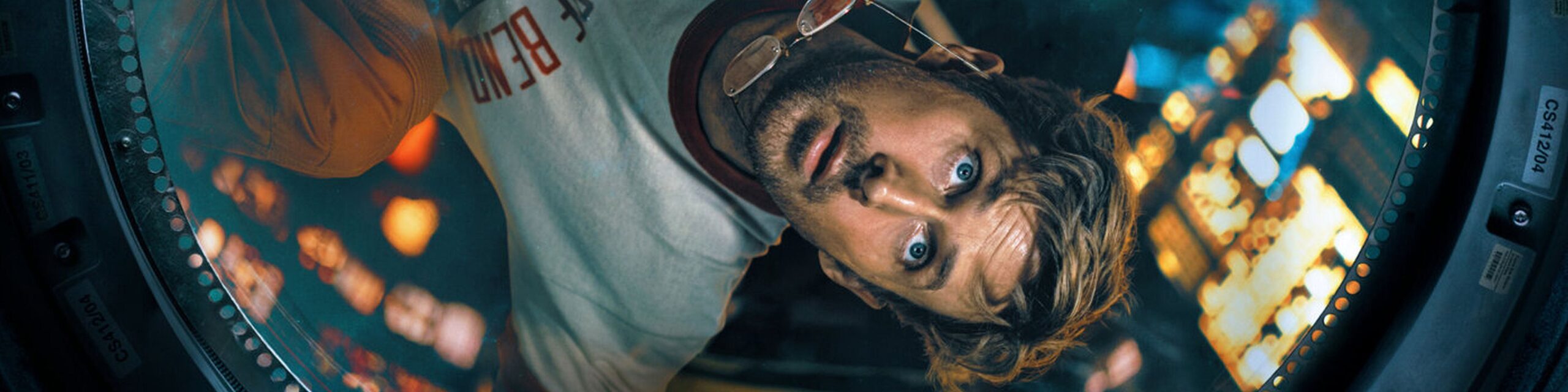
There’s a rubric for adaptations I heard once, that novels adapted into feature films don’t often work, because movies are more akin to short stories–novellas, at best. So the ideal medium for novel adaptation is the miniseries or sprawling prestige show, and in film, one must embrace brevity. Now, some tomes take to film adaptation–both faithful and loose–better than others, and Andy Weir‘s The Martian was one of those that I think did so particularly well. In the hands of Ridley Scott, a solid cast & crew, and retaining the particular voice and flavour of the author’s text (I gather. I haven’t read Weir’s novels), it definitely omitted or changed things from its source, but the fundamentals were so strong that even now, a decade later, my father who rarely remembers details on shows he’s currently watching, could tell you every beat of that film, not just the plot, but the emotional ones it conveys.
That is the power of the feature film, even in the age of everyone ‘second-screening’ (evident in my local cinema), to allow you to remember how it made you feel in a visceral way. In such a work, the average novel’s plot almost seems too much to cram into it, too many trees to stuff in, and rob one of the forest of being genuinely moved.
I bring up The Martian here, of course, because as I write this there is another Andy Weir adaptation in cinemas now, Project Hail Mary, and it brings with it inevitable comparisons. Scott isn’t the director’s chair, but screenwriter Drew Goddard returns, and in comes Ryan Gosling as a lone astronaut far from home, with a small ensemble back here on Earth who we occasionally return to for context. The first act is all set-up, in the breezy, quippy style that modern blockbusters are known for, but it’s at least not egregious. So far, so Martian.
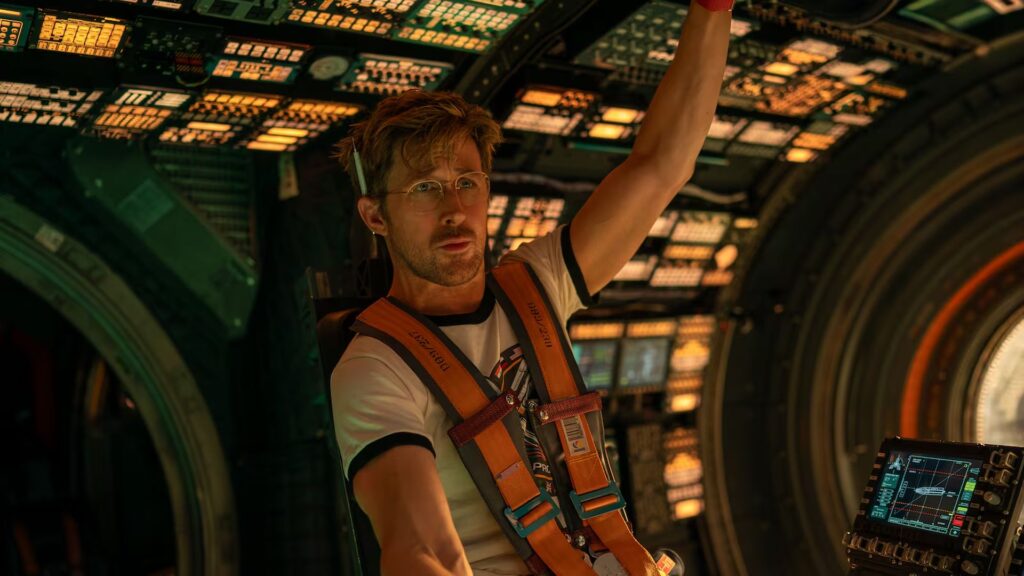
Somewhere along the way as the film settles into its second act, I started to get uneasy. The momentum had dipped, but not in the way a better film does: confidently lengthens its stride, colours outside the lines a little. Here it was struggling. Still quippy, still funny, still imparting much spectacle and interest, just letting every plot point and beat sit a little too long, get a little too well defined before moving on. The score by Daniel Pemberton does a lot of heavy lifting here, as the screenplay figures its central conceit of extra-terrestrial cooperation out. It’s not a subtle score, but I expect it to be on a lot of people’s play rotation, because like every individual part of the film, from Gosling’s performance to Greig Fraser‘s cinematography, it’s all solid, good–very good, even–but it somehow doesn’t add up.
Towards the end of the film, this unease in me had clarified into a single problem I could define: pace. The preceding two hours had many sequences of drama and action, human emotion enough to make the most cynical of second-screeners look up from their devices, but where I expected it to move, it lingered, and where I wanted it to linger, it rushed me along to the next mini-crisis that must be resolved now(!) and with little actual consequence. I went along as more acts unfurled like the pitches of enthusiastic saree salesmen.
There was, at last, a moment where, were this a short story, every single thread of emotional resonance had come to a resolution, and I thought, “Oh, this is where it should end.” Only it didn’t. The film went on for 20 minutes more from there, not only crossing its Ts and dotting its Is, but making sure every single one of those Ts and Is had their own Wikipedia subsection, footnotes, citations and all.
Another rubric in writing for both the page and screen is that one must, repeatedly and often, kill one’s darlings. I can think of 20 minutes of darlings I could have done without. Again, they are lush with spectacle and good acting, punctuated with that lovely score, but oddly unnecessary.
That’s the strange thing about the modern blockbuster. In another time, Project Hail Mary might have been a mid-level indie with solid effects work and a few rough edges, where time and budgets and the ruthless rigors of commercial cinema would have indeed killed those darlings, would have smoothed over some of the repetitive nature of its second and third (and fourth and fifth) acts — carved, from the bulk tree trunks of the novel, the silhouette of an effective, and affecting, forest. Maybe Ridley Scott could do it. Or Denis Villeneuve. Even Nolan, indulgent as I think he is, knew when Interstellar was overstaying itself and let his characters go. Lord & Miller (and by extension, author and producer Andy Weir) do not. It’s as if they do not trust themselves, and the audience, to enjoy the very thing they have asked us all to show up to experience.
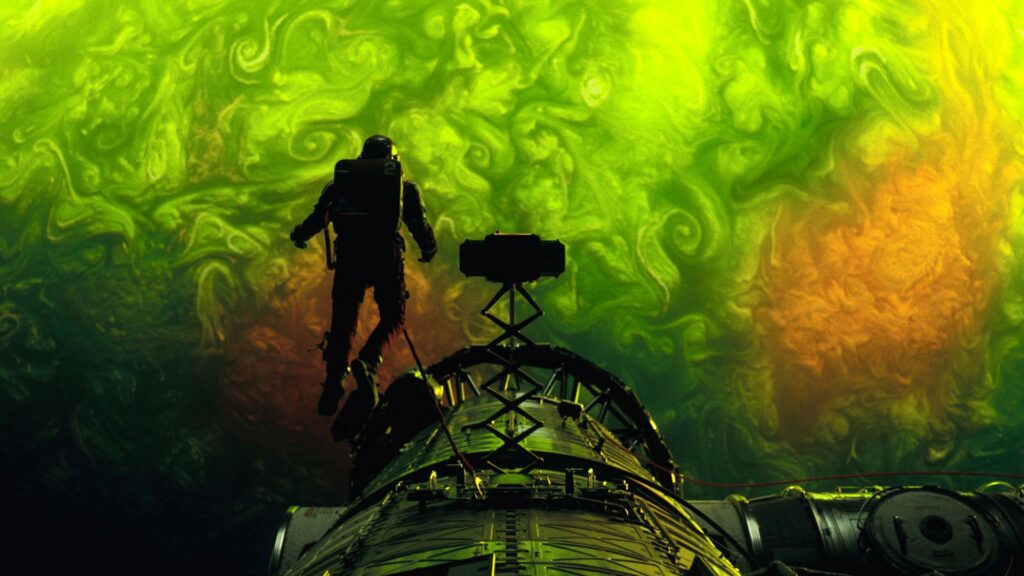
There’s a sequence in the middle of the film that probably has a million reels and behind-the-scenes videos about it already, about how it was done with practical effects or is a transcendent moment of artistry or whatnot. I don’t know, I haven’t watched any of them. After its complete runtime, I have had my fill of Project Hail Mary, probably for all time, despite thinking that it’s a good film, and despite the fact that I would recommend watching it.
But anyway, this sequence in the film is Ryan Gosling’s scientist doing the crux of his mission, standing out in a stream of alien matter while collecting samples. Things go all swirly and colourful and he just takes it all in, just silently lets the beauty and grandeur of it all wash over him.
Only the filmmakers don’t trust themselves, or us.
“What are you doing?” the other character interrupts to ask.
“I’m just having a moment,” he says, just so all the people second-screening know.
In the colour-bathed dim of the cinema before me, a few rows ahead, a person’s phone came up to take a picture.
We had, all of us, been trained well.
-VKB